

Tinubu Reaffirms Commitment to Power Reform, Tasks Siemens on Speedy Delivery of Presidential Power Initiative
Abiola Adigun| Albarka 89.9 FM| Ilorin| November 10, 2025|
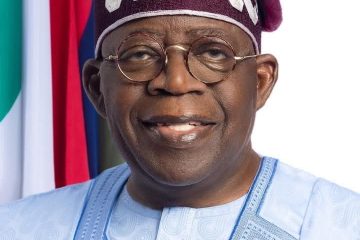
President Bola Ahmed Tinubu has restated his administration’s determination to fix Nigeria’s power challenges, declaring that the government is taking the electricity sector “very seriously” as a foundation for economic growth and improved livelihoods.
Speaking on Monday during a meeting with a delegation from Siemens Energy led by Dietmar Siersdorfer, the Managing Director for the Middle East and Africa, at the State House in Abuja, the President assured that his government would provide the necessary resources and policy support to ensure the success of the Presidential Power Initiative (PPI) — a key partnership between Nigeria and Germany aimed at boosting electricity generation, transmission, and distribution nationwide.
“There is no industrial growth or economic development without power. I believe that power is the most significant discovery of humanity in the last 1,000 years,” President Tinubu said. “We appreciate the partnership on this initiative and the progress so far, but it is not yet where we want it to be. We are taking it very seriously.”
The President, who was joined by Vice President Kashim Shettima, the Coordinating Minister of the Economy Wale Edun, Minister of Power Adebayo Adelabu, and Special Adviser on Energy Olu Verheijen, directed that major transformer substations be expanded from two to three phases to boost supply capacity.
“Our education, health care, and transportation all depend on energy. Without power, development is impossible. We are inspired and determined to make Nigeria the pride of Africa in industrial growth,” Tinubu added.
The meeting reviewed progress on the multi-billion-dollar Presidential Power Initiative, launched in 2018 under the Nigeria-Germany partnership to address the nation’s chronic electricity shortfall and grid instability.
Minister of Power, Adebayo Adelabu, reported significant milestones since the signing of the Accelerated Agreement at COP28 in Dubai last year.
He disclosed that under the pilot phase, Siemens Energy had successfully delivered and commissioned 10 units of 132/33kV mobile substations, three units of 75/100MVA transformers, and seven units of 60/66MVA transformers, collectively adding 984 megavolt-amperes (MVA) of transmission capacity to the national grid.
“We have also finalised plans for the Engineering, Procurement, and Construction (EPC) contract for Phase One, Batch One of the PPI,” Adelabu said. “The project covers five substations in Abeokuta, Offa, Ayede-Ibadan, Sokoto, and Onitsha, with two expected to be completed by the end of 2026.”
He added that Phase One, Batch Two will include six brownfield and ten greenfield substations nationwide, with a combined impact of 4,104 megawatts (MW).
Adelabu also highlighted reforms made under the Tinubu administration, including the Electricity Act 2023, which decentralised the power market and allowed states to generate and distribute electricity independently. He said the policy had attracted over $2.2 billion in new investments and activated 15 state electricity markets.
The Coordinating Minister of the Economy, Wale Edun, said the project would improve the ease of doing business, create jobs, and strengthen Nigeria’s industrial base.
“Reliable power supply will help reduce production costs, support small businesses, and ultimately reduce poverty,” Edun stated.
Siemens Energy’s regional chief, Dietmar Siersdorfer, reaffirmed the company’s commitment to the partnership, noting that a training centre was already under construction to equip Nigerian engineers and technicians with modern skills.
“The PPI is not just a project but a platform for long-term development and prosperity,” Siersdorfer said. “It will transform Nigeria into a regional power hub, strengthen local capacity, and generate thousands of jobs through local engagement and supply chains.”
The German Embassy representative, Johannes Lehne, pledged continued support from the German government, describing the power initiative as “a model of sustainable cooperation between both nations.”
The Presidential Power Initiative, signed in 2018 between Nigeria and Germany, seeks to modernize Nigeria’s electricity infrastructure and expand transmission and distribution capacity to 25,000MW by 2030. Siemens Energy serves as the technical partner, with support from the German government and financial institutions.
Though delayed by funding and policy challenges in previous years, the project has gained renewed momentum under President Tinubu, who has made power sector reform a central pillar of his administration’s Renewed Hope Agenda for economic transformation.
With new substations under construction, a training academy in progress, and expanded private sector participation, the government hopes the PPI will mark a turning point in Nigeria’s decades-long struggle with unreliable electricity.

Leave a reply


Albarka 89.9 FM broadcast opinions and debates in an open, diverse and unbiased style, with the aim of educating and empowering the public.
We also place emphasis on neglected perspectives and discussion on important local, national and global issues, reflecting values of peace, social justice, human rights, democracy, multiculturalism, freedom of expression and social change.
Our arts and music programming cover a wide spectrum of expressions and reflect the diverse culture of our listeners