
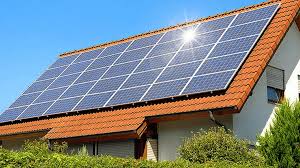
Solar Power Surges as World Seeks Cheaper, Cleaner Energy
By Abiola Adigun
As dusk falls over Lagos, the city lights flicker—not from the struggling national grid, but from solar-powered homes reclaiming control over their energy needs. For Nigerians like Niyi Usman, who recently switched to rooftop solar, the change has been transformative.
“Solar power is no longer a luxury—it’s a necessity,” he said, recalling years of burning petrol in noisy generators. “I spent too much on fuel and suffered too much in darkness.”
His story is emblematic of a quiet revolution: citizens turning to the sun as government promises on power remain unfulfilled. Nigeria, with its 11,165 MW installed capacity but only about half reaching the grid, struggles against peak demand of 17,520 MW. The result has been decades of blackouts, rising generator costs, and frustrated entrepreneurs.
But while Nigerians scramble for solar as a survival strategy, a wider transformation is sweeping across the globe.
According to the latest findings from Ember, a leading energy think tank, solar power is not only Nigeria’s escape hatch but also the fastest-growing source of electricity worldwide. In 2024 alone, solar grew by 29 percent, adding a record 474 TWh—more than the entire annual electricity consumption of France.
For the third year running, solar has outpaced every other source of new electricity. It now generates over 2,000 TWh annually, nearly 7 percent of the world’s electricity, while clean energy overall (solar, wind, hydro, nuclear) surpassed 40 percent of global electricity supply for the first time.
“Year after year, renewable growth continues to exceed expectations,” said Dr. Katye Altieri, a senior analyst at Ember. “What’s missing are higher ambitions and confidence from countries.”
The economics are shifting in solar’s favour. Ember’s June 2025 study found that in the world’s sunniest regions, solar combined with battery storage now delivers electricity almost every hour of the year—at about $104 per megawatt-hour. That’s cheaper than building new coal plants ($118/MWh) or nuclear reactors ($182/MWh).
“This is a game-changer,” said Phil MacDonald, Chief Operating Officer at Ember. “With falling battery costs, solar is no longer intermittent—it can become a reliable backbone of power systems, slashing fossil fuel dependence.”
Indeed, the International Energy Agency (IEA) estimates that renewables avoided 1.66 gigatonnes of CO₂ in 2024—equivalent to wiping out all emissions from the U.S. power sector.
Back home, Nigeria’s Rural Electrification Agency (REA) says it is mobilizing fresh funding to close the country’s yawning power gap.
“We want to work with the state government to address these challenges and provide electricity access to all,” said REA Managing Director, Abba Aliyu.
He revealed that the agency currently has a funding pipeline of close to $1.6 billion, including $200 million from the Japan International Cooperation Agency, expected to be signed soon, and another $50 million of repatriated funds from the U.S. Department of Justice.
“In the capital budget alone, we have close to ₦500 billion, of which ₦100 billion was earmarked for national public sector solarisation,” Aliyu added. “Through the program, we will energise 25 communities in the entire state, and we are expecting funding of close to $500 million for that project.”
Aliyu stressed that the REA was ready to partner with states to drive renewable energy projects. “We have the technical knowledge, technical ability, and resources to crystallise private funding,” he said.
The REA boss also highlighted the role of Renewable Energy Service Companies (RESCOs) in reaching Nigeria’s hardest-to-serve communities.
“These RESCOs have deployed over $2 billion worth of infrastructure across the country,” Aliyu said. “They have the technical knowledge and ability to crystallise private funding and have developed competency in community engagement—making communities understand the need for this infrastructure and take ownership of it.”
Aliyu noted that while some states like Ondo had scored well on policy capacity readiness, they needed to improve on funding and data readiness to attract private sector investment.
“With the Electricity Act, the federal government has handed over responsibility to the states. We did a readiness assessment on five parameters—policy, funding and investment, infrastructure, and data. We want to address funding and data for you while you address policy and capacity building,” he explained.
Still, the challenges are immense. The REA estimates that 119 million Nigerians—22 million households—remain without electricity access.
“We are committed to delivering electricity access to all Nigerians,” Aliyu said. “Our National Electrification Strategy and Implementation Plan provides a pathway for every state to achieve electrification.”
While China, India, Brazil, and South Africa lead the solar boom, Africa still contributes less than 1 percent of global solar generation—despite abundant sunshine.
“The technology is there. The sun is free. What Africa lacks is policy commitment and affordable finance,” said Moustapha Kamal Gueye, a climate policy expert with the ILO.
President Bola Ahmed Tinubu’s Renewed Hope Agenda promises improved electricity , but analysts warn Nigeria must move faster by subsidizing household solar kits, supporting rural microgrids, encouraging local solar manufacturing, and offering tax breaks to investors.
For now, Nigerians like Niyi Usman are not waiting. With each rooftop panel and humming inverter, citizens are taking power into their own hands.
The message from Ember’s report and the REA’s funding drive is the same: the future is solar, and the time to scale is now.
–
Leave a reply


Albarka 89.9 FM broadcast opinions and debates in an open, diverse and unbiased style, with the aim of educating and empowering the public.
We also place emphasis on neglected perspectives and discussion on important local, national and global issues, reflecting values of peace, social justice, human rights, democracy, multiculturalism, freedom of expression and social change.
Our arts and music programming cover a wide spectrum of expressions and reflect the diverse culture of our listeners