
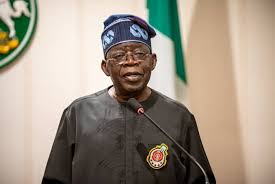
Nigeria Meets 2025 Revenue Target Ahead of Schedule
By Abiola Adigun
Nigeria’s economy recorded a rare milestone in August 2025, when the country met its full-year revenue target four months ahead of schedule, President Bola Ahmed Tinubu announced in Abuja on Tuesday.
The President, speaking at the Presidential Villa during a meeting with founding members of the defunct Congress for Progressive Change (CPC) and The Buhari Organisation, said the achievement was driven largely by non-oil revenues — a signal that the government’s push to diversify the economy away from crude oil dependence is beginning to bear fruit.
“The economy is now stabilised. Nobody is trading pieces of paper for foreign exchange anymore. The economy is now predictable. You do not need to know the CBN Governor to obtain foreign exchange or import goods,” Tinubu said. “What we need now is building the ship and the vessels for the export of our goods and creating more jobs for our people.”
The announcement comes at a time when Nigeria is grappling with inflationary pressures, high food prices, and the lingering effects of fuel subsidy removal. Yet, Tinubu maintained that the reforms under his Renewed Hope Agenda are laying the foundation for sustainable growth, citing investments in infrastructure, agriculture, and security.
The President revealed that agricultural mechanisation centres will be established in all regions of the country to expand cultivation and boost food production.
“We are going to have trainees. That programme is our path to food sovereignty,” he assured.
Economists say this is a crucial step, given that food inflation has hovered above 30 percent in 2025. “Agriculture remains Nigeria’s most realistic path to job creation and poverty reduction,” said Dr. Ayo Teriba, CEO of Economic Associates. “But mechanisation requires consistent funding, rural infrastructure, and policies that incentivise small holder farmers.”
Nigeria’s dependence on oil revenues has long left the economy vulnerable to global price shocks. According to figures from the Federal Inland Revenue Service (FIRS), over 65 percent of the August revenue came from taxes and levies outside the oil sector, including Value Added Tax (VAT), Company Income Tax (CIT), and Customs duties.
“This shows that reforms in tax administration and digital revenue collection are beginning to pay off,” noted Bismarck Rewane, a Lagos-based economist. “But sustaining this momentum will depend on how well the government manages inflation, unemployment, and infrastructure bottlenecks.”
Tuesday’s meeting also carried political undertones. Tinubu pledged to immortalise former President Muhammadu Buhari with a Buhari House and promised to integrate more members of the former CPC into his administration.
“When I see people like you, I am determined to work harder,” Tinubu told the delegation, which was led by former Nasarawa State Governor Umaru Tanko Al-Makura.
In response, Al-Makura praised Tinubu’s leadership and expressed loyalty ahead of the 2027 elections. “This is to assure you that we believe in your administration, and that will be our focus and commitment,” he said.
House Speaker Tajudeen Abbas also lauded the President for his inclusive approach, especially in his dealings with the people of Katsina State.
Despite the upbeat tone from the Villa, economists caution that meeting revenue targets is only one part of Nigeria’s economic puzzle. The bigger challenge lies in ensuring that revenues are effectively channeled into infrastructure, health, and social welfare.
“Revenue mobilisation is important, but Nigerians will judge this administration by how it translates into reduced poverty, stable power supply, and improved living standards,” said Dr. Ifeoma Nwafor, an Abuja-based development economist.
As Nigeria heads into the final quarter of the year, the early revenue success provides breathing room for Tinubu’s administration. But with inflation biting and unemployment still high, the test remains whether the President’s economic reforms can translate from numbers on a balance sheet into tangible improvements in the daily lives of citizens.
Leave a reply


Albarka 89.9 FM broadcast opinions and debates in an open, diverse and unbiased style, with the aim of educating and empowering the public.
We also place emphasis on neglected perspectives and discussion on important local, national and global issues, reflecting values of peace, social justice, human rights, democracy, multiculturalism, freedom of expression and social change.
Our arts and music programming cover a wide spectrum of expressions and reflect the diverse culture of our listeners