
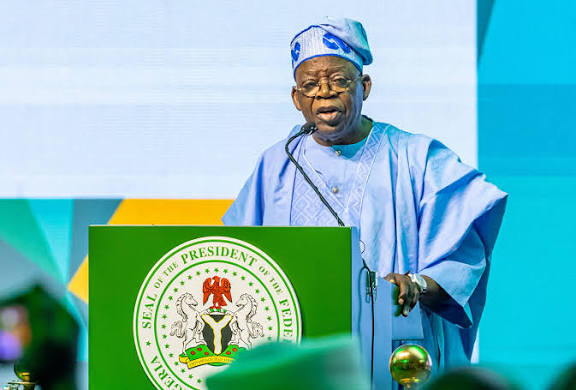
FATF Removes Nigeria from Grey List, Hails Tinubu’s Reforms and Political Will
By Abiola Adigun |Albarka 89.9 FM | Ilorin| October 24 2025
Nigeria has been officially removed from the Financial Action Task Force (FATF) grey list after over two years of rigorous reforms, marking a major milestone in the country’s global financial reputation and anti-corruption drive.
The FATF President, Elisa de Anda Madrazo, announced Nigeria’s delisting on Friday during the organisation’s plenary session in Paris, France, commending the administration of President Bola Tinubu for demonstrating “strong political will and inter-agency collaboration” in combating money laundering, terrorism financing, and related financial crimes.
“Nigeria has demonstrated a strong political commitment to fight financial crimes. We have seen the change and the political measures put in place,” Madrazo declared.”After sustained efforts of just over two years, Nigeria has demonstrated a stronger capacity to investigate and prosecute — a fundamental improvement that enables the country to focus resources on crimes such as drug trafficking and terrorist financing.”
Alongside Nigeria, three other African countries — Mozambique, Burkina Faso, and South Africa — were also removed from the FATF grey list, a category that subjects nations to increased monitoring for deficiencies in anti-money laundering and counter-terrorist financing (AML/CFT) systems.
Nigeria was first placed on the FATF grey list in 2022, following identified gaps in regulatory oversight, financial transparency, and enforcement mechanisms. Since then, the country has undertaken a series of legislative and institutional reforms, including the strengthening of the Nigerian Financial Intelligence Unit (NFIU), the Economic and Financial Crimes Commission (EFCC), and improved oversight of non-financial sectors such as real estate and designated non-financial businesses.
Madrazo also praised Nigeria’s efforts to enhance beneficial ownership transparency — a key requirement in global anti-corruption frameworks — and noted “important enhancement in supervision of real estate agencies and other non-financial institutions.”
Representing the Nigerian delegation at the plenary, Minister of Finance, Wale Edun, reaffirmed Nigeria’s determination to sustain the reforms and strengthen its role in the global fight against illicit financial flows.
“Nigeria is honoured to contribute its expertise and experience to the global fight against serious crimes threatening shared security and prosperity,” Edun said. “With the resolve and dedication of men and women back home, we will continue to work towards a safer and more secure Nigeria.”
Edun, along with Attorney General of the Federation, Prince Lateef Fagbemi (SAN), and Minister of Interior, Olubunmi Ojo, led Nigeria’s delegation to the FATF meetings — a move FATF officials described as a testament to Nigeria’s high-level political commitment.
The FATF President acknowledged the support Nigeria received from its international partners — including France, Germany, the United Kingdom, the United States, and the European Commission — throughout the reform process.
Experts say Nigeria’s exit from the grey list will improve investor confidence, strengthen cross-border financial transactions, and boost the country’s image in the global financial system.
Economic analysts also note that the removal aligns with Tinubu’s broader agenda to reposition Nigeria as a transparent, business-friendly, and reform-driven economy.
The development marks a significant diplomatic and governance win for the administration, coming months after similar international recognitions of Nigeria’s economic and institutional reforms.
Leave a reply


Albarka 89.9 FM broadcast opinions and debates in an open, diverse and unbiased style, with the aim of educating and empowering the public.
We also place emphasis on neglected perspectives and discussion on important local, national and global issues, reflecting values of peace, social justice, human rights, democracy, multiculturalism, freedom of expression and social change.
Our arts and music programming cover a wide spectrum of expressions and reflect the diverse culture of our listeners