
A King Without Honour in Nollywood’s Court of Recognition
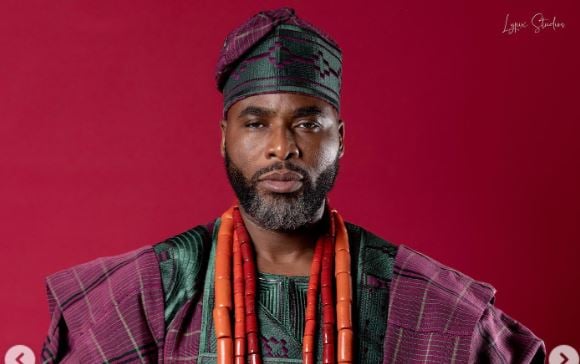
A King Without Honour in Nollywood’s Court of Recognition
By Abiola Adigun
Albarka 89.9 FM
In the sprawling landscape of Nollywood, where stars rise and fade with dizzying speed, few names command both respect and quiet bewilderment like Ibrahim Abiodun Ajadi Chatta. A multi-talented actor, producer, singer, and writer, Chatta is widely celebrated by colleagues and filmmakers but curiously sidelined by one of the industry’s most prestigious platforms—the Africa Magic Viewers’ Choice Awards (AMVCA).
Despite a career spanning over three decades, punctuated by stellar performances and cultural contributions, Chatta has never been invited—let alone nominated—for the AMVCA. For many, it is a mystery. For his fans, it is an injustice.
“Chatta is one of the finest actors of his generation. He interprets roles with a rawness and authenticity that you rarely see on screen,” says veteran actor and producer, Femi Adebayo. “It remains shocking that his brilliance hasn’t been duly recognized at the AMVCA level.”
Born on October 13, 1970, in Bacita, Edu Local Government of Kwara State, Chatta hails from the Nupe ethnic group—proudly identifying with his Tapa roots even while becoming a dominant force in Yoruba cinema. His early life was marked by turbulence: dropping out of Government Secondary School due to behavioral issues, he pursued self-education and survival jobs, including driving buses.
But his destiny changed when he embraced theatre, honing his craft before crossing into Yoruba Nollywood, where he rose to prominence with Aiyekooto (2012). Since then, his filmography has been nothing short of prolific: Atini O’go (2006), Orere Laye (2009), Ifa Iwa (2013), October 1 (2018), King of Thieves (2022), Jagun Jagun (2023), and most recently Iwo: Bait (2025).
“He embodies versatility—whether as a villain, a king, or a pauper, Chatta delivers,” notes film critic Yinka Akanbi. “He is Nollywood’s method actor, often disappearing so completely into his roles that you forget he is acting.”
Beyond acting, Chatta is a gifted singer and multilingual performer who has composed over 100 movie soundtracks. He is also a daring entrepreneur. His most ambitious project yet is the Africhatta Film Village and Resorts in Oyo State, a 74-acre cultural haven built without external loans or grants.
Valued at over ₦1.4 billion, the film village is designed as both a cinematic hub and cultural showcase, complete with thatched settlements, horse stables, and traditional architecture. Major productions, including Toyin Abraham’s Iyalode and Femi Adebayo’s Jagun Jagun, have already been shot there.
“What Chatta is doing with Africhatta Film Village is groundbreaking,” says Nollywood producer Tunde Kelani. “He is not just preserving culture, he is creating infrastructure that will outlive him.”
Despite winning the Best Supporting Actor (BON, 2012 & 2013), Best Actor of the Year (Yoruba) (City People Awards, 2019), and the Legend of the Year Award (OAFP, 2024), Chatta’s omission from AMVCA recognition is glaring.
Industry watchers often liken his case to “a king without honour in his own court.”
“It’s baffling,” says actress Toyin Abraham Ajeyemi. “Ibrahim is a legend. His absence from AMVCA nominations is not a reflection of his worth, but of the system’s blind spot.”
What makes Chatta’s story remarkable is how he defied the odds. Without a university degree, he became a self-taught intellectual, channeling street wisdom and online learning into a career that commands admiration. His journey from a dropout and bus driver to one of Nollywood’s cultural custodians speaks to resilience and passion.
As Nollywood continues to evolve, Ibrahim Chatta remains both an enigma and an icon—an actor revered by peers, adored by fans, but still awaiting mainstream validation from some quarters.
And yet, in the quiet dignity of his craft and the bold statement of Africhatta Film Village, Chatta has already written his legacy. Perhaps, in the end, he doesn’t need an invitation to sit at Nollywood’s table—he is building a table of his own.
Leave a reply


Albarka 89.9 FM broadcast opinions and debates in an open, diverse and unbiased style, with the aim of educating and empowering the public.
We also place emphasis on neglected perspectives and discussion on important local, national and global issues, reflecting values of peace, social justice, human rights, democracy, multiculturalism, freedom of expression and social change.
Our arts and music programming cover a wide spectrum of expressions and reflect the diverse culture of our listeners